The Real Guide to Making Money with AI Video in 2026
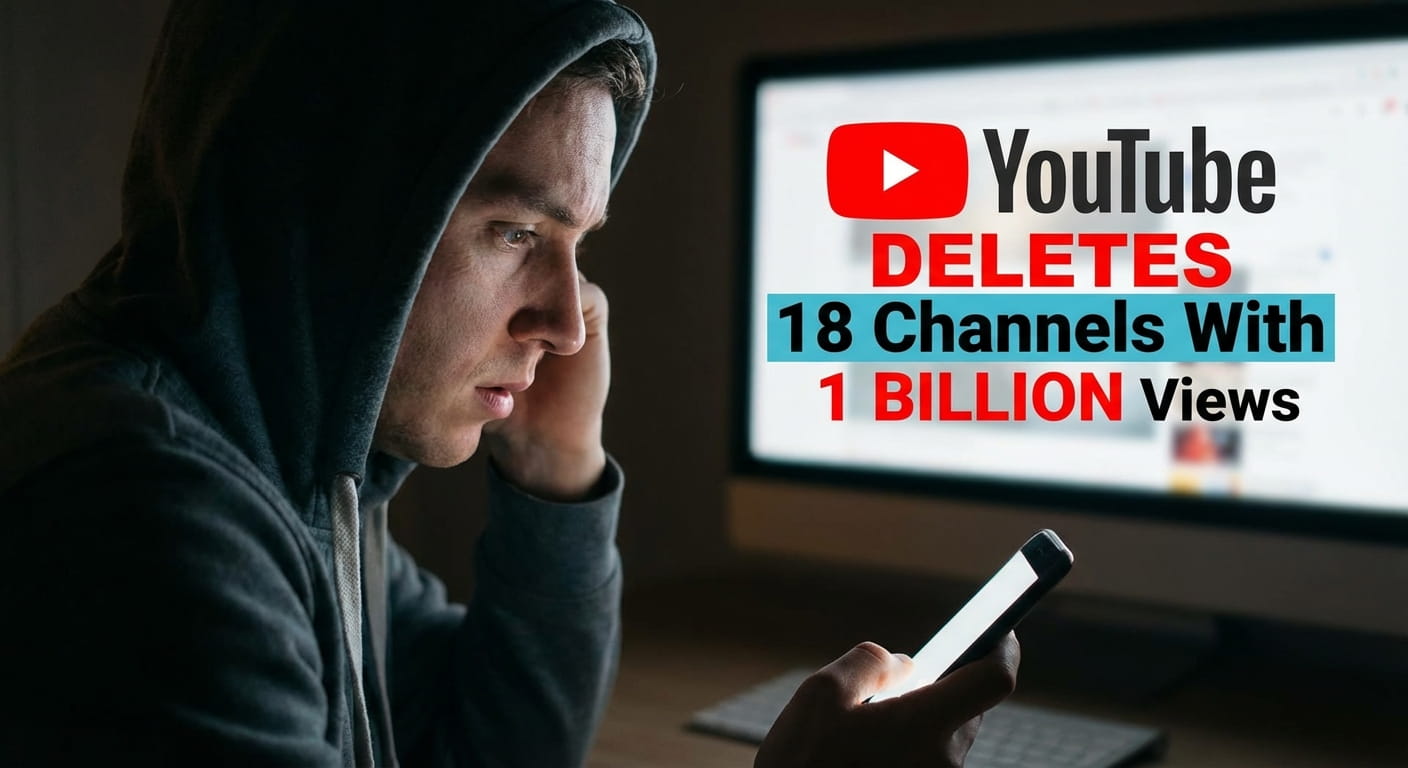
In January 2026, YouTube permanently deleted 16 channels. Not demonetized. Deleted. Those channels had 4.7 billion views and 35 million subscribers combined. Gone overnight. Their crime? Mass-produced AI content with no human creativity behind it.
If you're thinking about making money with AI-generated video, whether through TikTok, YouTube Shorts, or Instagram Reels, you need to understand the real landscape before you start. The opportunity is massive, but the rules have changed.
I'm building Kinova Studio, an AI video agent for content creators, so I spend my days inside this ecosystem. This post is everything I've learned about what's actually working, what gets channels killed, and how to build a sustainable AI video business in 2026.
What's in this guide
1. YouTube's AI crackdown, what actually happened
In July 2025, YouTube rolled out a major policy update. They renamed their old "repetitious content" rules to "inauthentic content" and broadened what it covers. The core message: AI as a creative tool is welcome. AI as a replacement for human creativity is not.
Then in January 2026, they acted on it at scale. Sixteen channels were permanently terminated. Channels like Screen Culture and KH Studio that all followed the same pattern: faceless format, text-to-speech narration, templated scripts, multiple uploads per day with minimal human editorial input.
YouTube CEO Neal Mohan put it plainly: the platform will prioritize content demonstrating genuine human creativity over AI-generated material optimized purely for algorithmic engagement.
⚠What gets you terminated
✓What keeps you safe
The line YouTube draws: did a human make creative decisions here, or did a machine do everything? If you're writing original scripts, adding your own perspective, and using AI to handle the tedious parts, you're fine. If a machine did it all, you're not.
2. The real economics of Shorts
Before you dive in, understand the money. There's a lot of misleading information floating around.
YouTube Shorts pay through the Partner Program's revenue sharing model. YouTube pools ad revenue from ads shown between Shorts in the feed, then distributes it based on your share of total views. Creators keep 45% of their allocated share, lower than the 55% for long-form videos.
In real numbers, Shorts RPM (revenue per thousand views) typically lands between $0.03 and $0.08. At 1 million Shorts views per month, you're looking at roughly $30 to $80. At 10 million views, $300 to $800 a month.
Let that sink in. Ten million views a month for a few hundred dollars from ads alone.
💡The real play
Niche selection is an 8x multiplier
The same 100,000 views can earn wildly different amounts depending on your niche. Here's what the data shows:
| Niche | CPM Range | 100K Views Earns | Competition |
|---|---|---|---|
| Personal Finance | $15 – $22 | ~$1,500 | High |
| Legal / Court Drama | $12 – $18 | ~$1,200 | Low |
| Digital Marketing | $12 – $18 | ~$1,200 | Medium |
| Tech / AI Tutorials | $10 – $16 | ~$1,000 | Medium |
| True Crime | $8 – $12 | ~$600 | Medium |
| Motivation / Self-Help | $5 – $9 | ~$350 | High |
| Gaming / Entertainment | $1 – $4 | ~$185 | Very High |
Beyond ad revenue: stacking income streams
The creators making $5K to $30K a month are not doing it from ads alone. They stack multiple streams: affiliate marketing (5-20% commissions, with YouTube Shopping tags getting 23% more clicks than description links), digital products like templates or courses, brand sponsorships ($100 to $2,000+ per sponsored Short), and email list building that converts viewers into customers.
The system looks like this: Shorts for discovery, long-form for deep engagement, affiliates and products for real revenue.
3. Niches that actually pay
Not all niches are equal. In 2026, the data is clear on what works for faceless, AI-assisted channels.
The obvious high-CPM choices are personal finance, tech tutorials, and business case studies. But what most people miss are the low-competition niches with massive growth that almost nobody is talking about:
Literary analysis has only around 10,000 competing channels but strong RPM at $9.15. Senior health and longevity content is growing at 19x with minimal competition. English-dubbed Chinese drama is exploding at 13x growth with only 80,000 channels. Manhwa recaps pull $10.45 RPM with just 10,000 channels. These are the pockets where a new creator can gain traction fast.
When picking a niche, ask three questions. Is the CPM high enough to justify the effort? Is competition manageable? And critically: can you produce this content faceless and at scale while still maintaining the human layer YouTube requires?
One more thing. Don't chase viral trends. A channel about "how to use ChatGPT" might spike today but could be irrelevant in a year. A channel about personal finance fundamentals or true crime will still have an audience in five years.
4. The content formula that works
Every high-performing Short follows four beats. It's not a secret formula, but you need to understand why it works, not just copy it.
Beat 1: The Hook (first 3 seconds)
You have about three seconds before someone scrolls. The trick is specificity. "Here's a money tip" is weak. "A bank loophole that 94% of people don't use" is strong. The more specific and unusual your claim, the harder it is to scroll past.
Beat 2: Curiosity
Don't give away the answer right after the hook. Create an "open loop," an unresolved question the brain needs to close. This is what keeps watch time high, and watch time is the single most important metric for the algorithm.
Beat 3: Value
Deliver fast. Every second should teach something, reveal something, or move the story forward. Shorts reward density. No filler.
Beat 4: Loop Ending
End the video in a way that connects back to the opening, or leave a slight open question. When a viewer rewatches your 60-second Short, YouTube counts that as 200% retention. That's what triggers the algorithm to push your video to the next distribution tier.
💡The critical "human layer"
This is exactly the problem I'm trying to solve with Kinova Studio. The biggest bottleneck for creators isn't script-writing or ideation, it's producing visually consistent, character-driven videos at scale without every clip looking generic. Kinova handles the tedious production work (consistent characters, scene generation, video assembly) so you can focus on the creative direction and storytelling that keeps you safe and monetizable.
5. Realistic timeline to monetization
The "make money in 7 days" pitch is fantasy. Here's what creators actually report.
To monetize YouTube Shorts, you need the YouTube Partner Program: 1,000 subscribers plus either 4,000 watch hours in 12 months or 10 million Shorts views in 90 days. YouTube lowered the Shorts threshold from 15 million to 10 million recently, which helps, but it's still a big number.
| Timeline | What to Expect | Focus |
|---|---|---|
| Months 0–3 | Very little revenue. Building traction. | Post daily, learn what works, feed the algorithm data. |
| Months 3–6 | $200 – $800/month. Hit monetization thresholds. | Optimize retention, add affiliate links, refine niche. |
| Months 6–12 | Compounding growth. $1K–$5K+ possible. | Layer in products, sponsorships, long-form content. |
| Year 2+ | $5K–$30K/month for top performers. | Multiple channels, systemized production, team. |
The key word is consistent. Posting 3 to 5 times per week, analyzing retention data every week, and iterating. There's no shortcut past this phase.
6. How to use AI without getting banned
This is the part where I see creators get tripped up the most. Here's the framework I use and recommend.
Use AI for: research, ideation, first drafts of scripts (then rewrite in your voice), editing, thumbnail generation, caption creation, music generation (original audio keeps your full revenue allocation since there's no licensing split), and production tasks like scene generation and video assembly.
Don't use AI for: the final script without rewriting, the sole voiceover with no variation, mass-producing near-identical videos, any realistic content without disclosure.
⚠The mental test
One more detail people miss: if you use AI to generate realistic-looking content, YouTube requires you to disclose it. For standard content the label shows in the expanded description. For sensitive topics like health, news, elections, or finance, it appears directly on the video player. Failing to disclose can result in forced labeling, content removal, or Partner Program suspension.
Bottom line
AI video in 2026 is a real business opportunity, not a get-rich-quick scheme. The channels getting deleted treated AI as a replacement for creativity. The ones thriving use AI as an amplifier for their ideas.
If you're starting from zero today, here's what I'd do: pick one high-CPM niche you can produce faceless. Spend a week studying the top 10 channels in that niche. Write 5 scripts using the hook-curiosity-value-loop formula, adding your own perspective to every one. Post your first video by this weekend. Then post consistently for 90 days before you judge whether it's working.
The creators who build systems now, with quality and originality baked in from day one, are the ones who'll own this space.
Build AI videos that stay monetizable
Kinova Studio is an AI video agent that handles character consistency, scene generation, and video assembly, so you focus on the creative direction that keeps your channel safe.
Try Kinova Studio